Battery protect
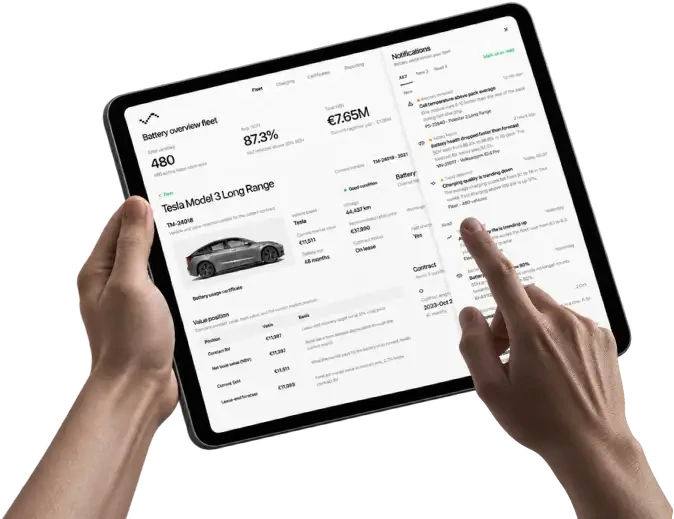
Battery protect measures true state of health per pack continuously and forecasts what is left in 5 to 10 years.
Learn moreBattery intelligence for the assets operators own and the ones they serve, from the first charge through to residual value.
Explore platform


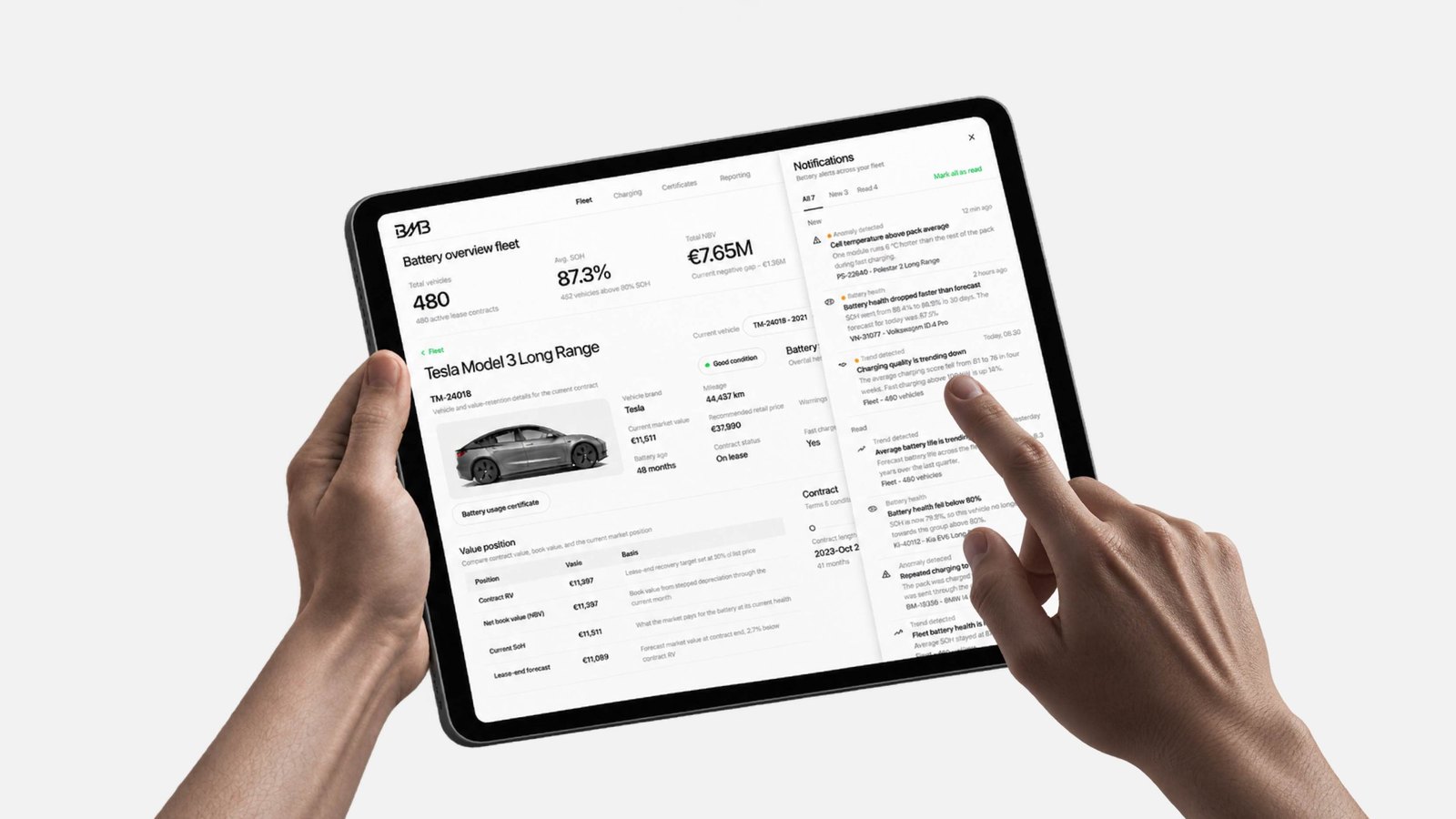
Four industries, one intelligence platform: batteries that last longer, keep their value and give warning before a fault.
See all industries


BMB follows each pack as it moves between vehicles, chargers and owners. The pool can be financed and insured, and the station never hands out a weak pack.
Request a demoYour contact in Europe
Your contact in APAC
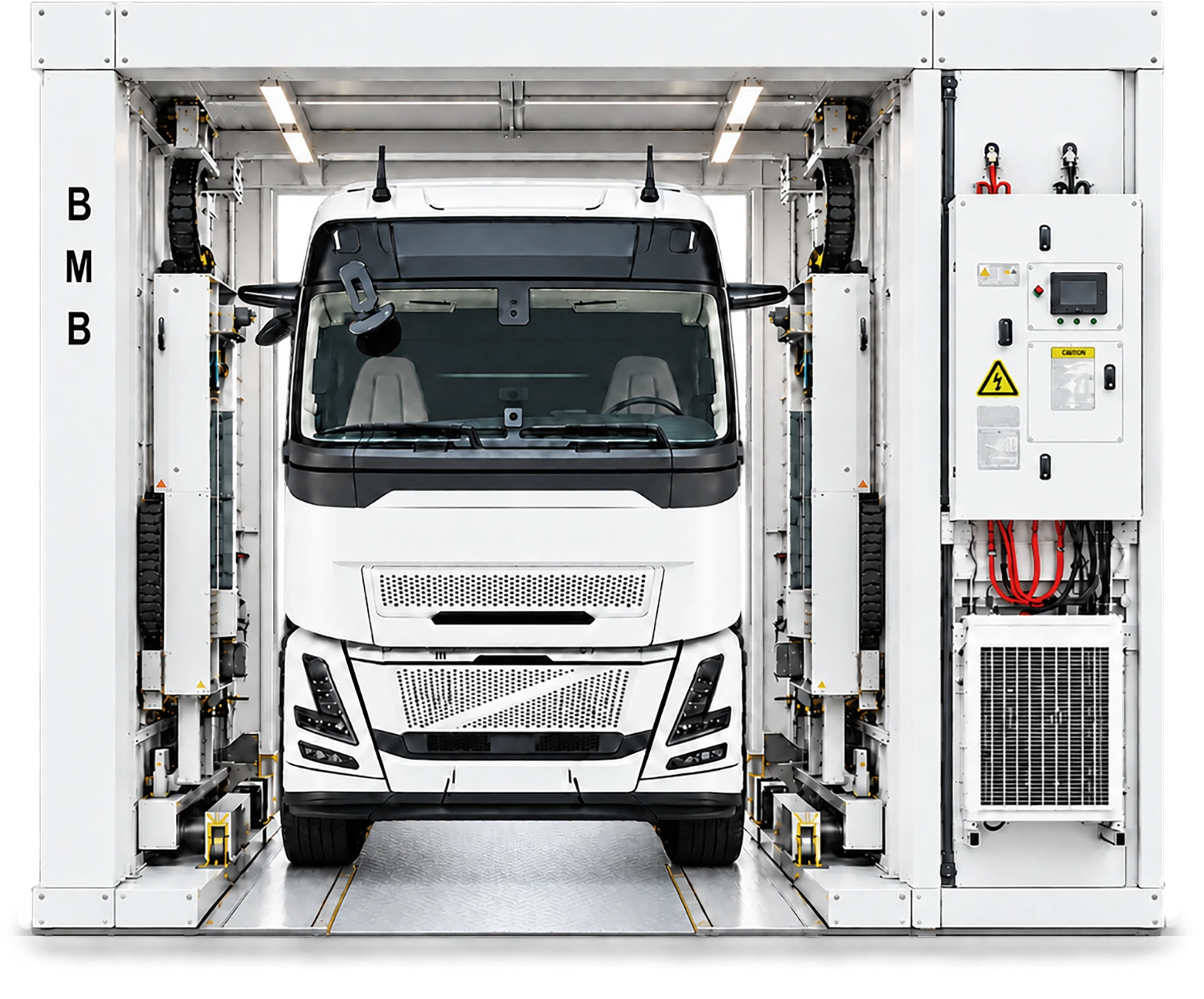
A battery swap station exchanges a depleted pack for a charged one in minutes. The pack stops belonging to a vehicle and becomes shared stock, owned by one party, charged by another and used by a third.
The job is to do enough swaps a day to make the station pay and to keep as many packs in the pool usable as possible. The value of the packs themselves also has to be protected.
Nobody holds a continuous record of what an individual pack has been through, because it moves between vehicles, chargers and owners. The station’s screen counts packs as available that are still charging, cooling down, faulty or worn out. A hub can run out of usable packs at the busiest hour.
| Topic | Today | With BMB |
|---|---|---|
| Pack history | Lost each time the pack changes vehicle or owner | One continuous record per pack |
| Pack condition | Packs still charging, cooling down or worn out counted as available | The real condition of each pack in the pool |
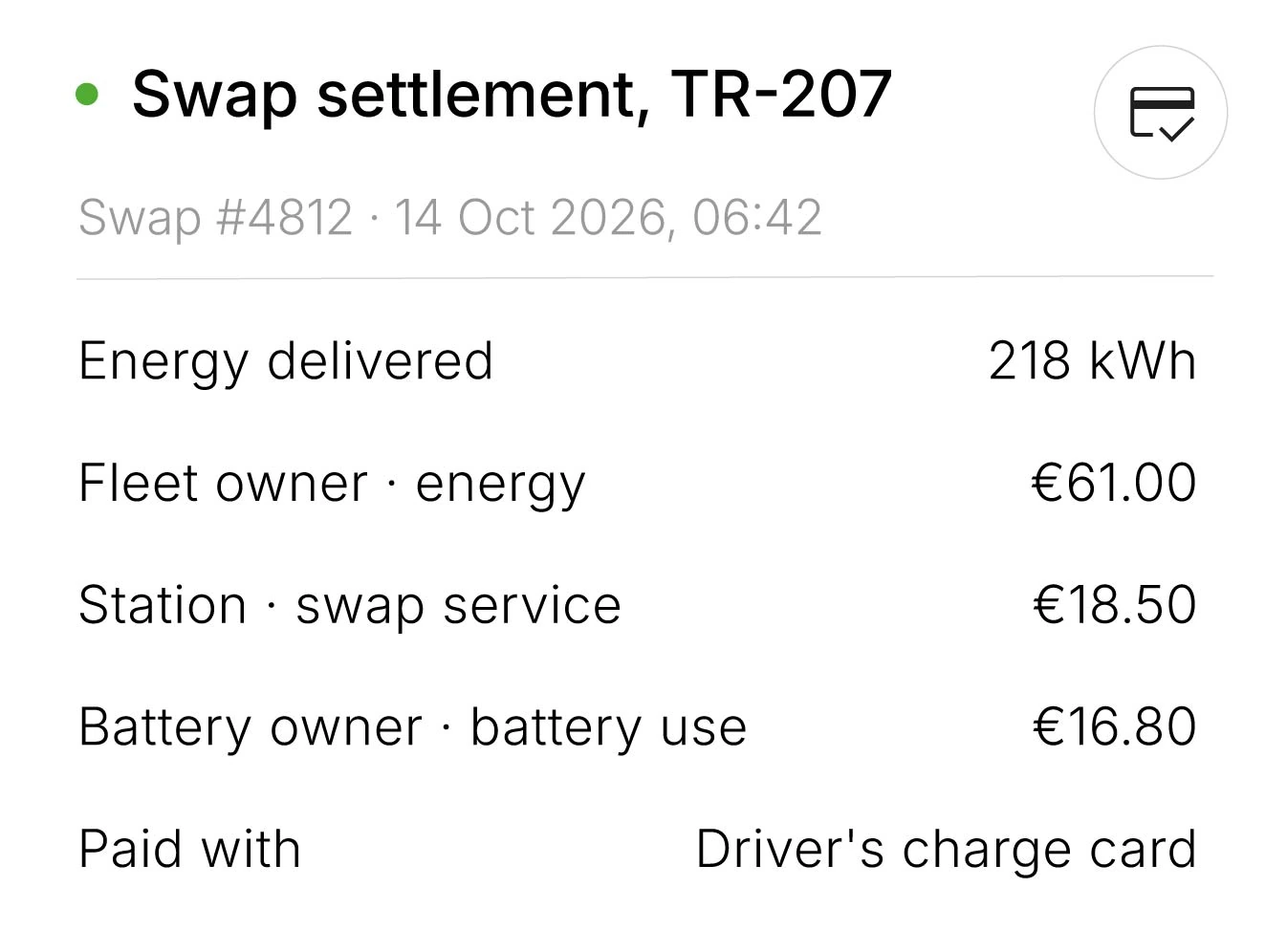
| Who pays | Worked out between driver, fleet, station and pack owner | Every swap split and billed to each party |
| Financing and insurance | No bank lends against or insures stock nobody can measure | A health record per pack a lender and an insurer can rely on |
Chinese heavy truck hubs do 50 to 80 swaps a day. A car station needs 60 to 70 to break even, and NIO’s European stations average about 14. Every spare pack above the minimum of 1.2 per vehicle is capital standing still.
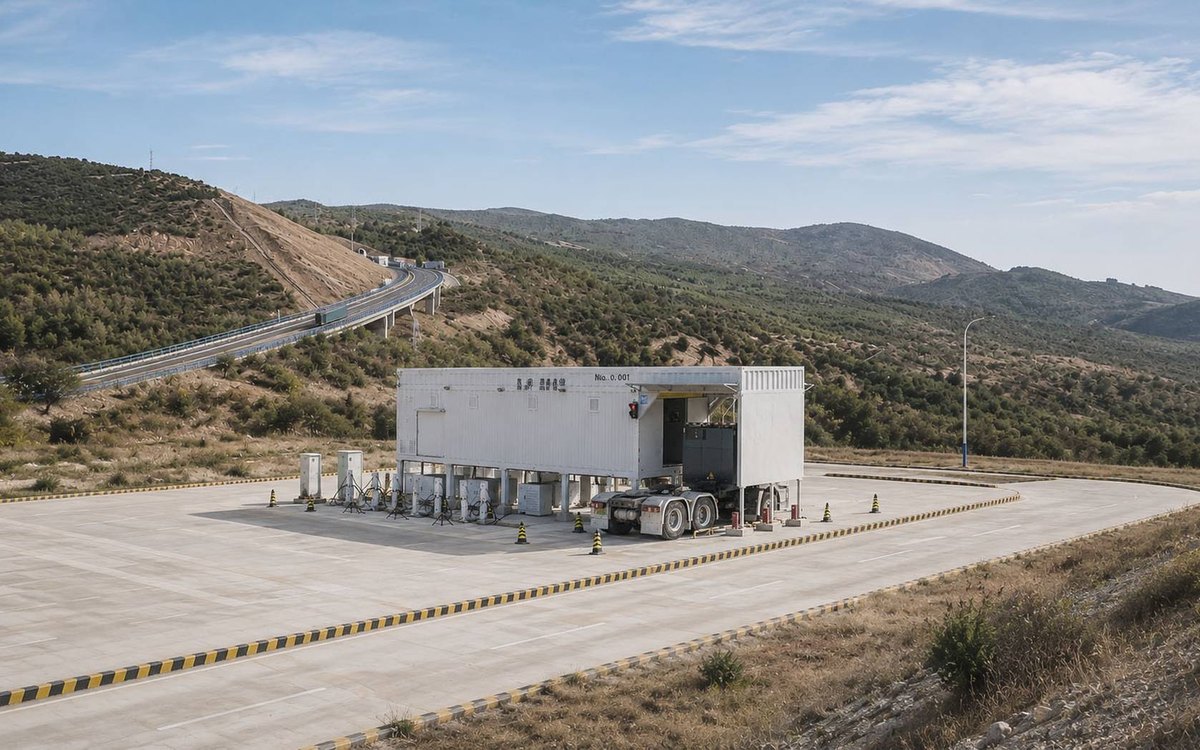
In a modelled European truck network, 75 to 85% of the investment is in the batteries, not in the stations. A pack lives five to ten years, and falling prices for new packs erode the value of the ones in stock. The health of the packs is the value of the business.
BMB gives every pack a health record from its own data and a usage certificate when it changes hands. Battery swap settlement works out who pays what in every swap and sends each party its own invoice. Swap settlement like this runs today in China and does not exist yet in Europe.
Five features run on the data the station and packs already produce: Battery protect, Health charging, Battery swap settlement, Peak shaving and Usage certificate.
Battery protect measures true state of health per pack continuously and forecasts what is left in 5 to 10 years.
Learn more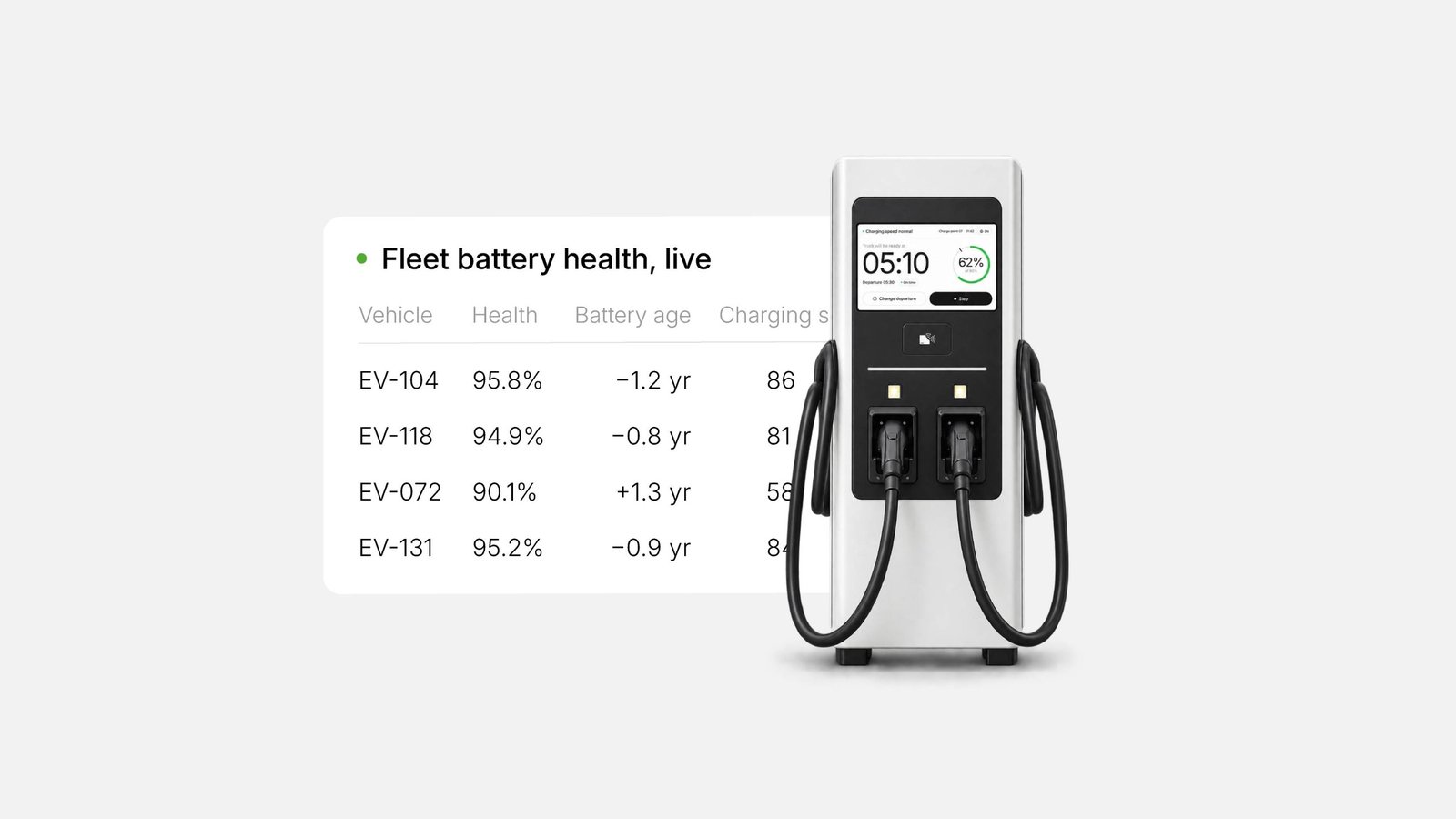
Health charging shaves the current peaks that do the damage. A pack degrades up to 14% less over 100,000 km, at a similar charging speed.
Learn more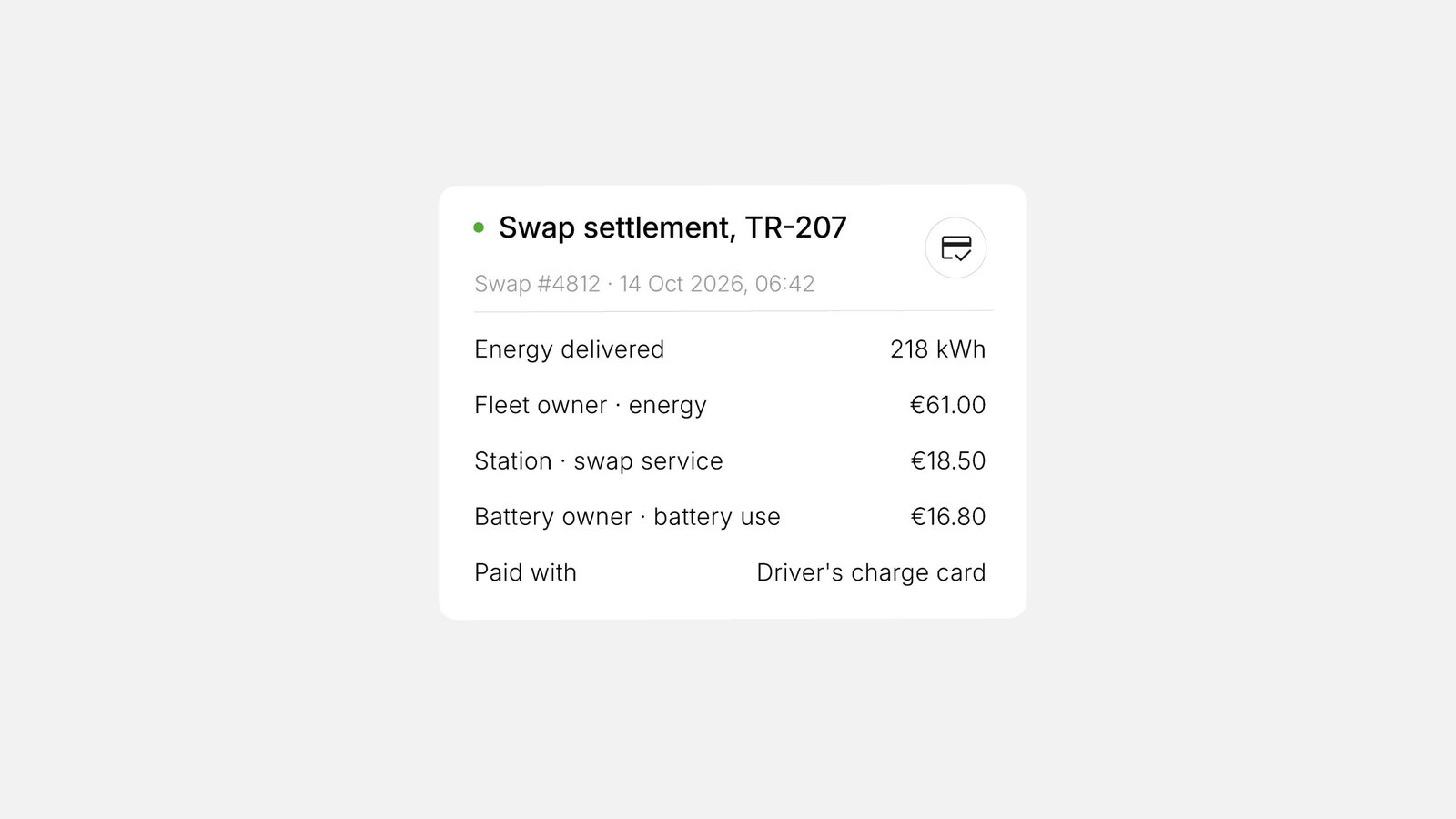
Battery swap settlement splits every swap between driver, fleet, station and pack owner, and bills each of them correctly.
Learn more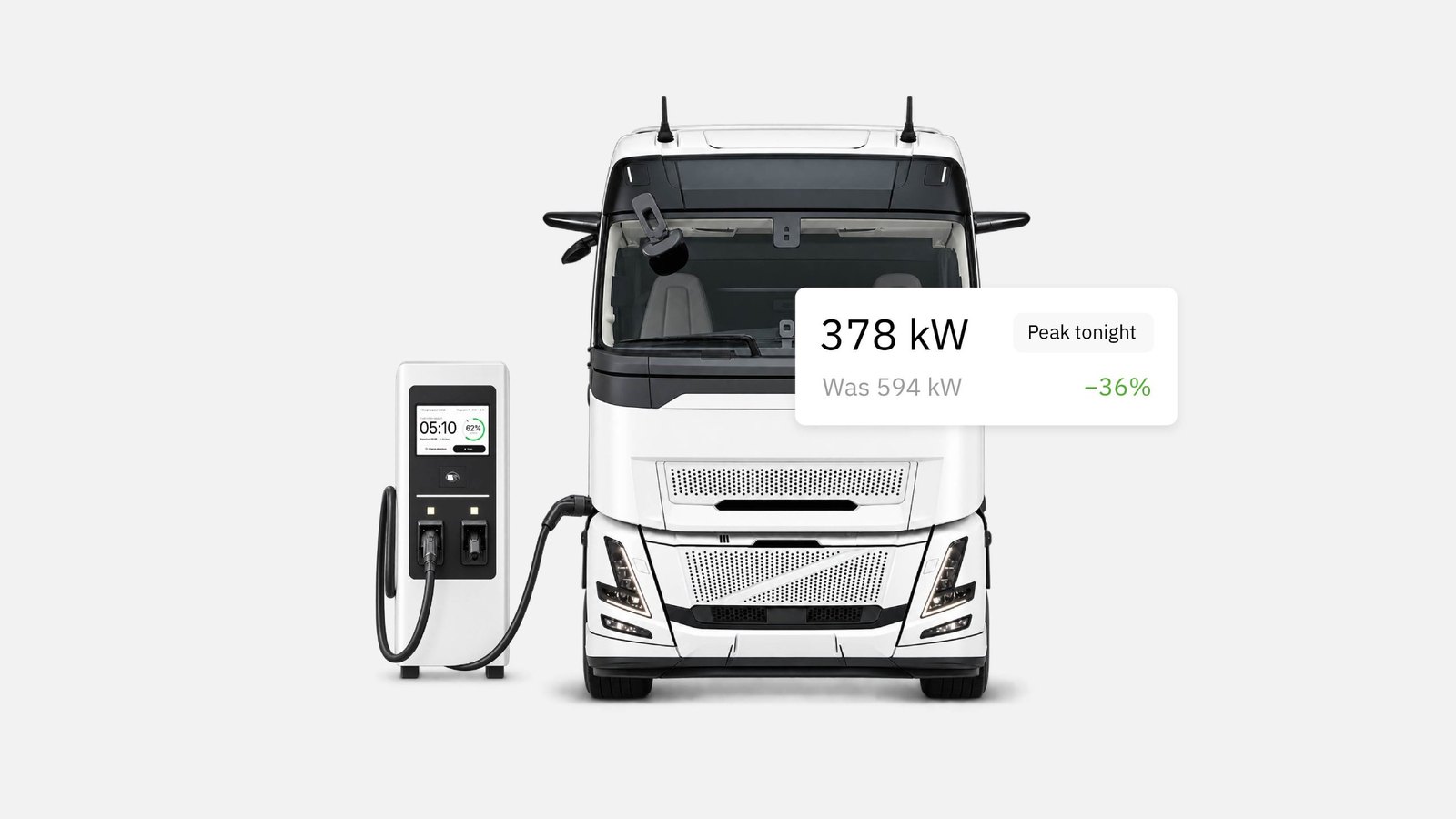
Peak shaving spreads the site’s power draw over the night. The billed peak comes down, and the existing grid connection goes further.
Learn more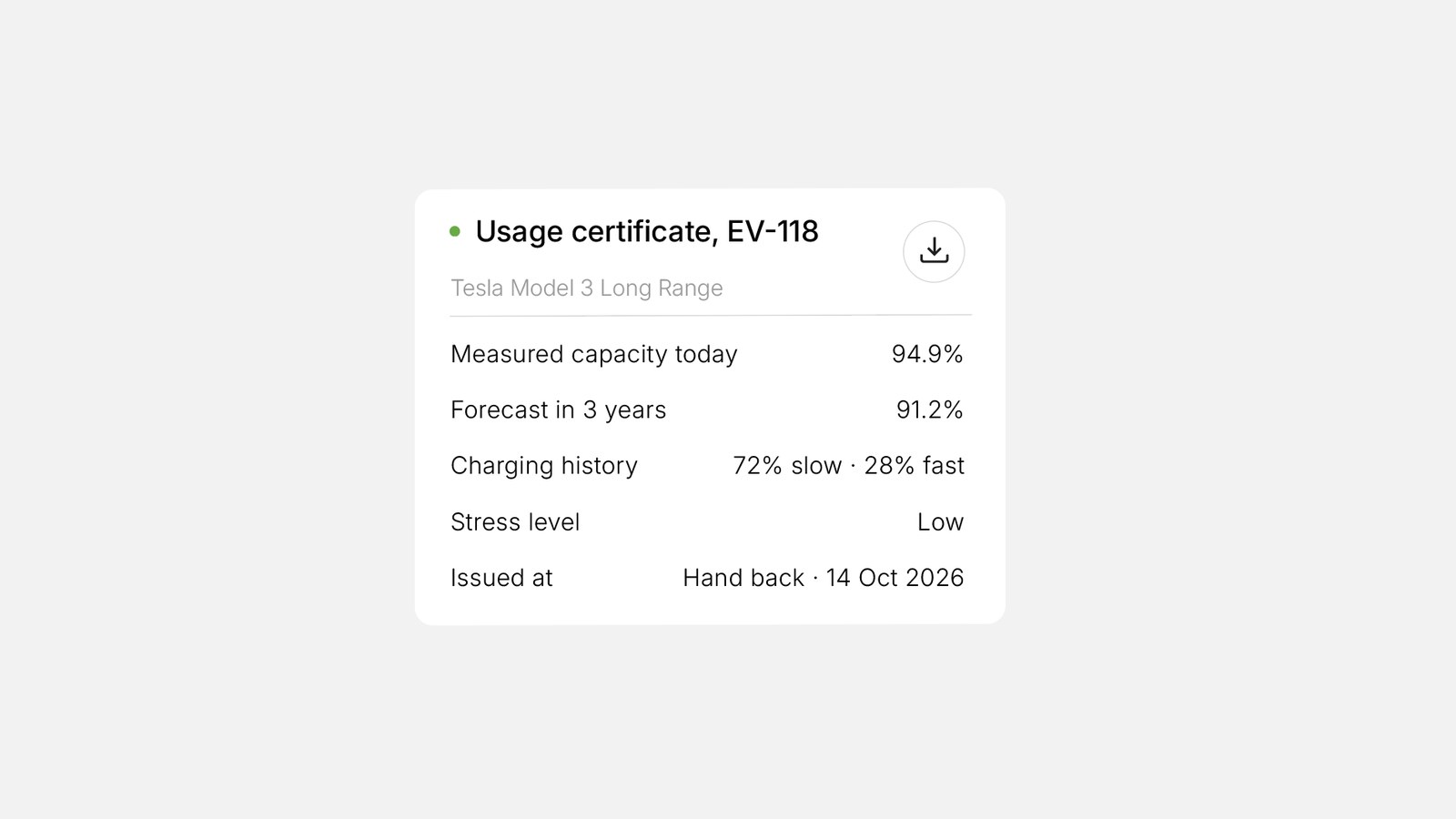
Usage certificate gives every pack an independent record of its treatment and remaining capacity, ready for a buyer, an insurer or the 2027 passport.
Learn moreThe BMB team shows which features fit which batteries, with the features running in a live demo.
Your contact in Europe
Your contact in APAC