
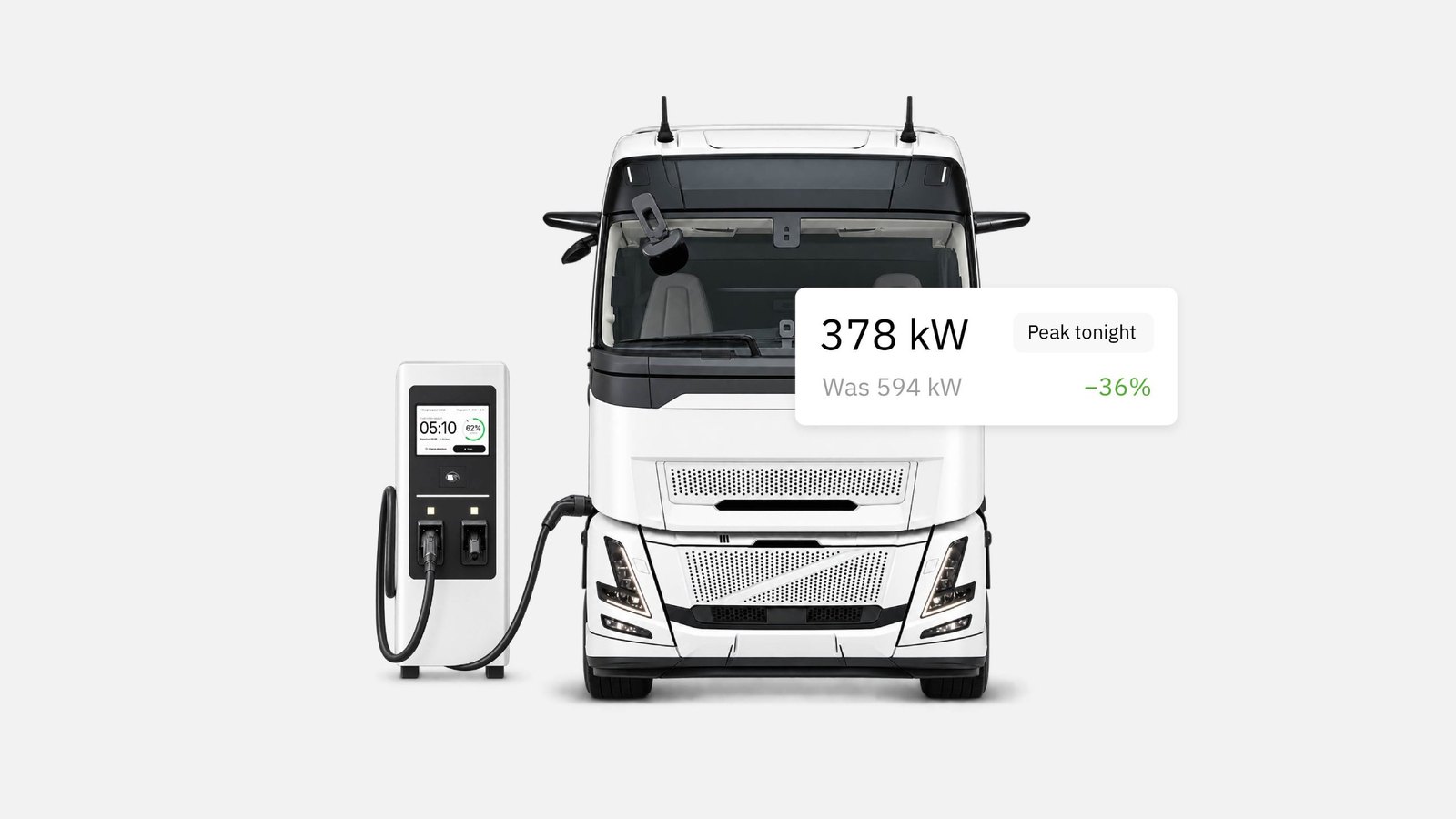
Peak shaving
Peak shaving spreads the site’s power draw over the night. The billed peak comes down, and the existing grid connection goes further.
Learn moreBattery intelligence for the assets operators own and the ones they serve, from the first charge through to residual value.
Explore platform


Four industries, one intelligence platform: batteries that last longer, keep their value and give warning before a fault.
See all industries


BMB knows what every pack and the depot battery can really take. Logistics companies charge more trucks and vans overnight, and the packs last longer.
Request a demoYour contact in Europe
Your contact in APAC
Logistics companies move goods with their own electric trucks and vans and charge them at their own depots. They own the vehicle, the charger and often a battery at the depot, all three at once.
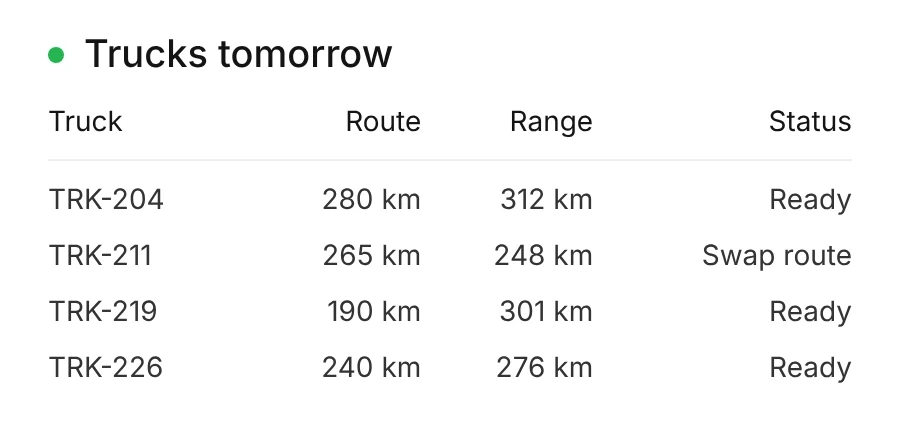
The job is to keep the depot’s peak inside the grid connection and to get cost per kilometre below diesel. Every truck also has to leave in the morning with enough range for its route.
The grid company bills the highest 15 minutes of the month, and that charge is often 20 to 30% of the energy bill. A 40 truck depot needs 2 to 6 MW, and a bigger connection costs €70,000 to millions with years of waiting. Until then, the number of trucks that can charge overnight is capped by the cable.
| Topic | Today | With BMB |
|---|---|---|
| Grid connection | Caps the number of trucks charged overnight | Charging spread much harder inside the same limit |
| Planning | Route, charging and battery in three separate systems | The route planner sees the real state of charge and health of each pack |
| Battery health | The truck’s own BMS says the pack is fine | An independent reading per pack |
| Battery passport | Paperwork to build from 2027 | A usage certificate built from the same data |
In a 2026 study of 1,114 vehicles, the truck’s own BMS missed 93% of the worst packs. Real capacity differed by 12 to 25% between trucks of the same model. Trucks that looked fine the evening before failed in the morning.

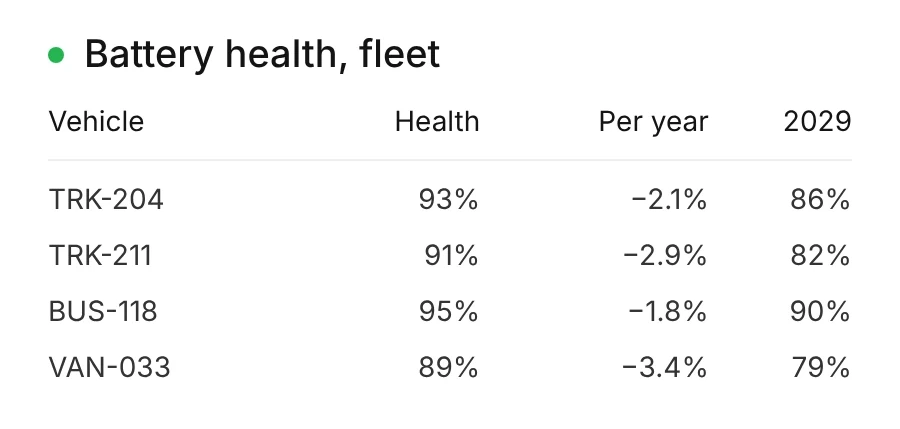

Heavy commercial packs that mostly fast charge lose around 5% a year. Health charging reduces that by up to 14% over 100,000 km, on a truck that costs around €275,000. That protects cost per kilometre now and resale value later. The usage certificate for the 2027 battery passport builds itself from the same data.
Anomaly detection shows the evening before which trucks will not make the morning. Planners assign another vehicle instead of facing a missed delivery.
Six features connect the vehicle, the charger and the depot battery: Peak shaving, Health charging, Battery protect, Usage certificate, Anomaly detection and Capacity unlock.
Peak shaving spreads the site’s power draw over the night. The billed peak comes down, and the existing grid connection goes further.
Learn more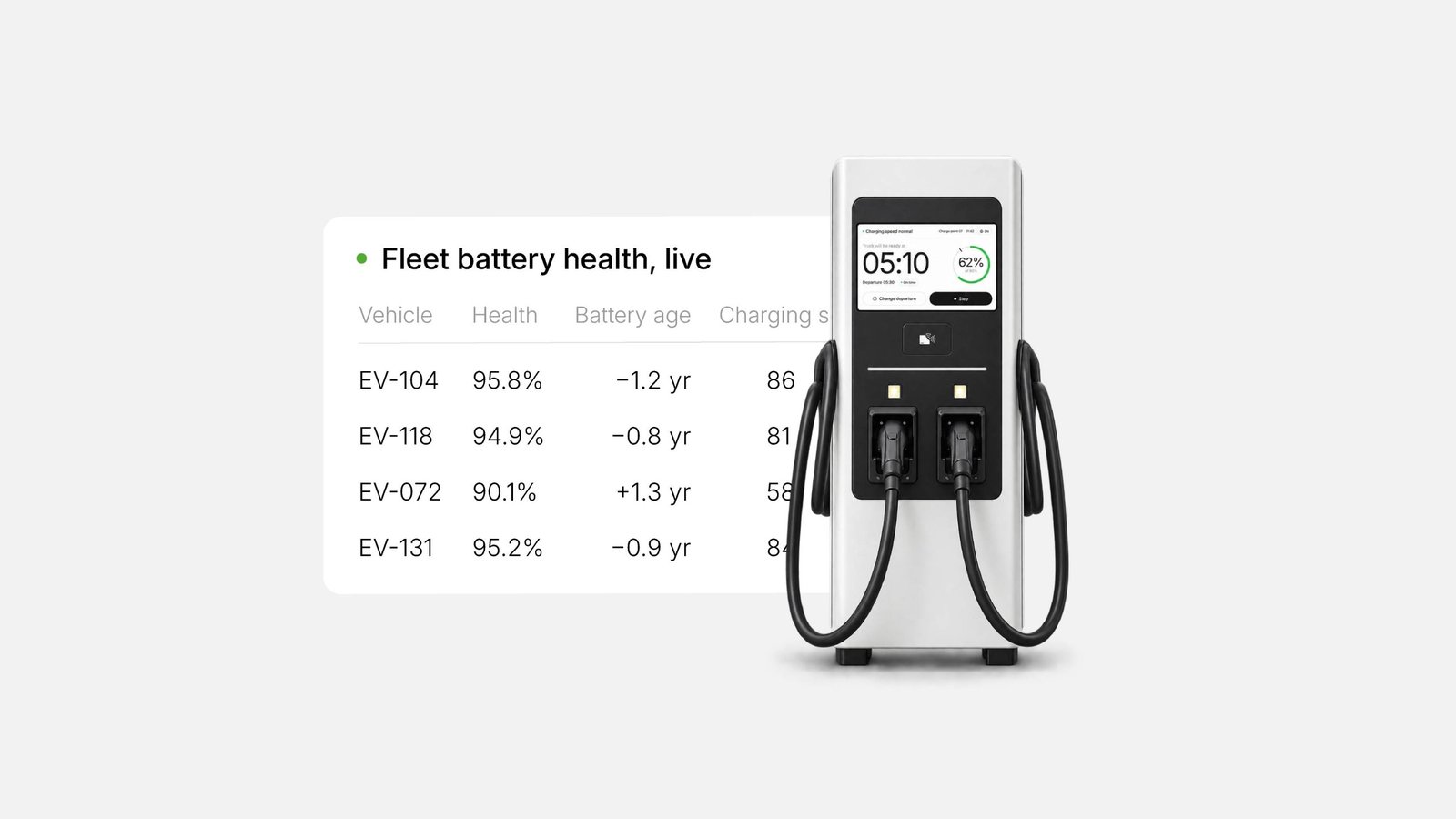
Health charging shaves the current peaks that do the damage. A pack degrades up to 14% less over 100,000 km, at a similar charging speed.
Learn more
Battery protect measures true state of health per pack continuously and forecasts what is left in 5 to 10 years.
Learn more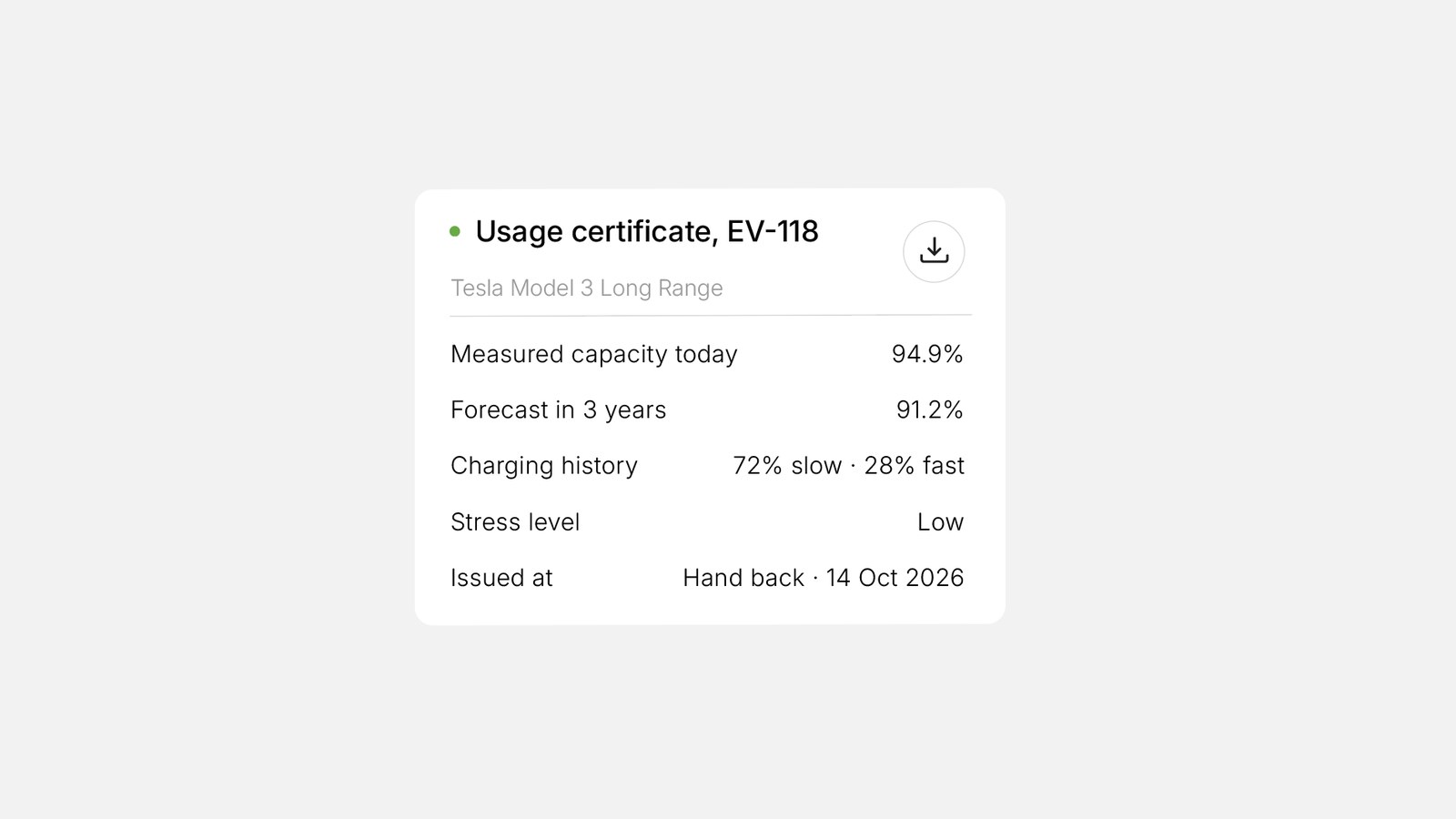
Usage certificate gives every pack an independent record of its treatment and remaining capacity, ready for a buyer, an insurer or the 2027 passport.
Learn more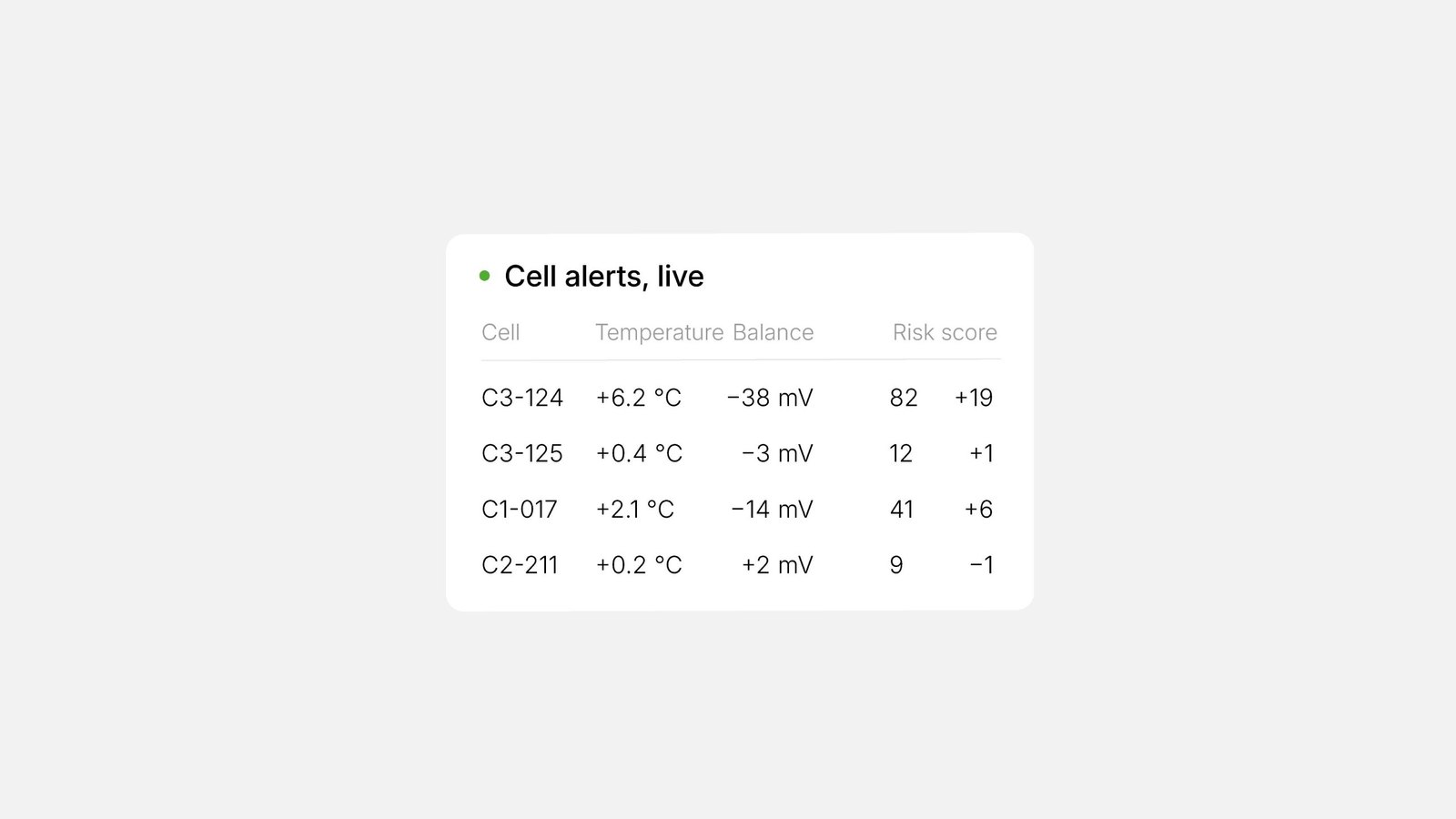
Anomaly detection flags cells running hot or drifting out of balance in real time, long before the next test.
Learn more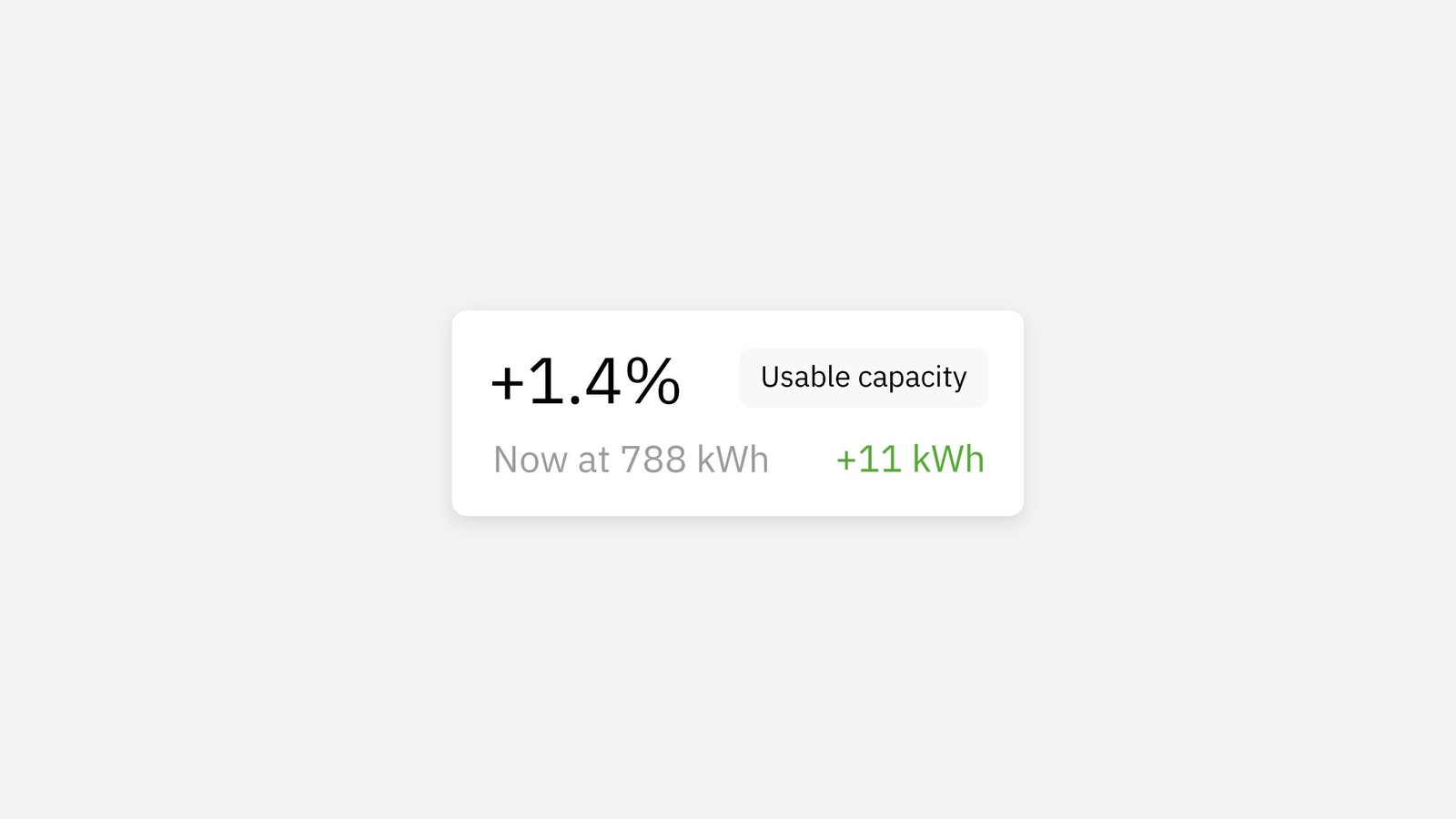
Capacity unlock works out how much of the rated capacity a pack really delivers, and brings it back towards the limit. It runs on live data, through a BMB edge unit on site or a software link (API).
Learn moreThe BMB team shows which features fit which batteries, with the features running in a live demo.
Your contact in Europe
Your contact in APAC